About UK Hydro-MIP

The UK Hydro-MIP is a community-lead Model Intercomparison Project, seeking to further hydrological understanding by comparing streamflow simulations over the UK from a range of hydrological and land-surface models. Our key ambitions are:

  • To further understanding of our current model capability for UK river flows.
  • To demonstrate model structural uncertainties.
  • To guide model selection by demonstrating model suitability for different purposes.
  • To identify common modelling challenges and drive model development.
  • To bring the modelling community together.
UK Hydro-MIP Phase 1

The first phase of UK Hydro-MIP is in progress.  All participating modellers have submitted their daily river flow outputs following our modelling protocol. 

Modelling Protocols


This ensured that all models used consistent driving data over the same time period – with further decisions on model calibration, setup and ancillary datasets left to the expert judgement of each modelling group. Data was submitted for 15+ different models, with some models including runs with multiple calibration processes and/or different processes included, leading to over 30 simulated streamflow timeseries. The dataset will be published by summer 2026. If you would like early access to the data, please contact us at HydroJules@ceh.ac.uk.


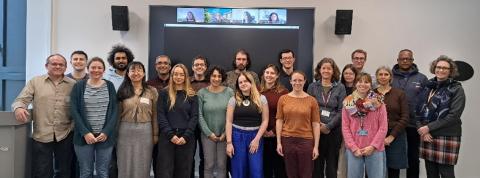
Analysis of the first phase outputs was launched at the Jan 26 Hackathon event, where community members gathered to analyse and discuss the data. Outcomes of this event are being further developed and written up.
 

Image
Picture of attendees at Jan 2026 Hackathon


Participating Models and Catchment Selection

The UK Hydro-MIP represents a diverse range of model types, including machine learning models (LSTM), lumped hydrological models (EXP-HYDRO, HBV, GR6J, PDM, RRMT, SMART), HRU-based hydrological models (DECIPHeR, Pycatchmod), gridded hydrological models (Grid-to-Grid, HBV-TYN, SHETRAN, Wflow_sbm) and land surface models (JULES). 
The full UK Hydro-MIP covers 673 catchments across Great Britain. Within this, we identified 628 core catchments with good data availability for models that required calibration. 

Future Plans

There are many potential avenues of exploration, ideas under consideration include:

  • Extending the UK Hydro-MIP to include variables such as soil moisture, actual evaporation, groundwater estimates, etc.
  • Higher temporal resolution, e.g. 15 minute flow, to better explore flood events.
  • Different driving data, to evaluate the impacts of driving data on outputs (potentially relaxing the constraints on driving data and calibration, allowing comparison of models under their “ideal” set-up).
  • Different calibration options, e.g. varying the calibration metric to determine the impact this has on simulations.
  • Extending the UK Hydro-MIP spatially, i.e. beyond GB.
  • Extending the UK Hydro-MIP temporally, to better evaluate long-term trends.

If you have suggestions, or ideas for future funding or collaborations, please contact us at HydroJules@ceh.ac.uk.

Get Involved

The first phase is closed for model submissions, and the outputs will be openly available by summer 2026. If you would like early access to the data, please contact us at HydroJules@ceh.ac.uk.
If you would like to collaborate on or contribute to future phases of the UK Hydro-MIP, please contact us at HydroJules@ceh.ac.uk.

Image
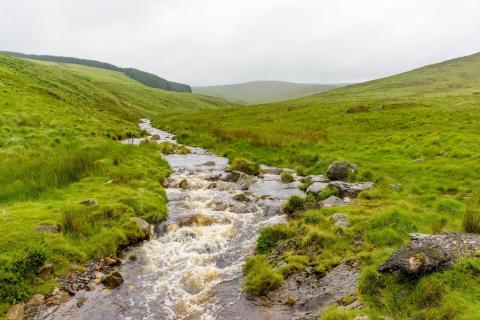
A river flowing through hilly scenery


Hydro-JULES logo, UK Centre for Ecology and Hydrology logo, British Geological Survey logo, National Centre for Atmospheric Science logo, National Centre for Earth Observation logo